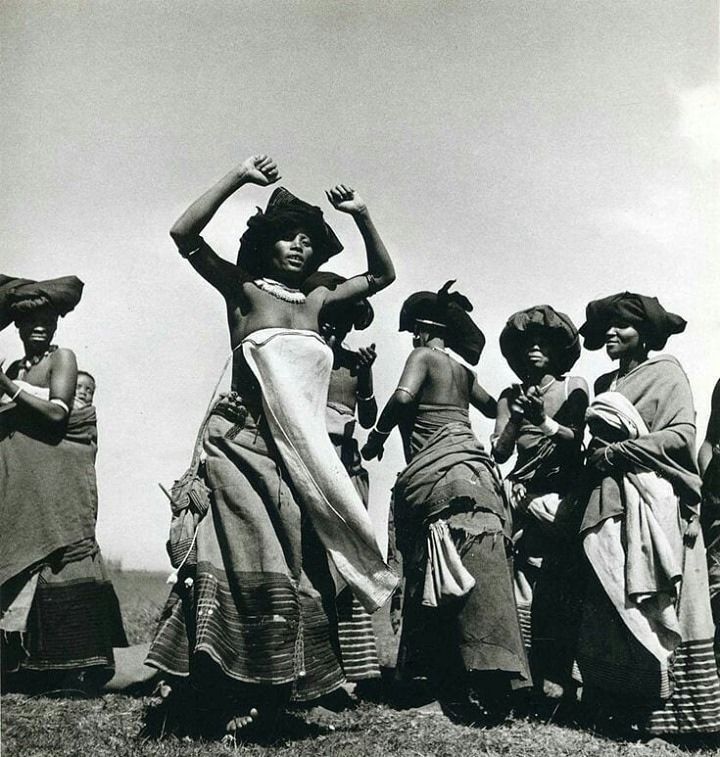
The ocean is a body of water made up of multiple sources. When one looks at the ocean, it’s difficult to tell where the water originates from. Some of it comes from water bodies like lakes and rivers, and some of the water comes from when the sky opened and let out God’s tears as She wept. Wherever the water comes from, the ocean is made up of all of these sources. The same is true of the production of knowledge, which comes from a variety of places: knowledge from academia, knowledge from books, knowledge from history taught at school, and knowledge from families, passed down from generation to generation. However, more often than not, women are written out of history and not allowed at the site of memory. Women are once again pushed into the fringes of society, and an important part of knowledge is gone. Indigenous knowledge passed down from generation to generation is often unwritten but spoken, drawn, and maybe sung.
First and foremost, it is crucial to reflect on these academic institutions and how institutionalisation influences the production of knowledge, as well as the type of knowledge created. Naturally, academic institutions spring to mind when thinking about the sources of knowledge and as the holders of the keys to knowledge. Formal academic institutions are where knowledge creators are created. These organisations demand that knowledge be generated within their framework for it to be respected and valued.
Jane Bennett discusses the University of Cape Town Dance Department’s battle to be accepted as a legitimate source of academic value due to their unusual approach to knowledge creation (Bennett, 2008, p. 5). These conceptual structures are predicated on theories of objectivity, the removal of one’s identity from the study, and the elimination of extraneous influences and tales. Knowledge production institutions depend on frameworks to define what constitutes legitimate knowledge, whereas those who produce it are “straight-jacketed” (Vollenhoven, 2016)
Most decolonial authors and feminist writers do not view the university as a conducive space to produce radically decolonial knowledge. Bennett adopts a parallel viewpoint about the knowledge production institutions, i.e., formal academic settings, and how even the most progressive and revolutionary researchers and scholars are constrained by these bureaucratic processes, institutional views, and theoretical frameworks. The current form of accepted knowledge production inside these institutions dismisses feminist ideas and African decolonial knowledge, which can also be considered indigenous knowledge even inside the African setting. At the same time, when this knowledge is produced, the researcher and the research are reduced to being reactionary and even contrarian (Lewis & Baderoon, 2012, p. 4). Additionally, it’s critical to assess what constitutes “legitimate” knowledge.
Valid knowledge is defined as an unbiased study produced within the confines of cisgender heteropatriarchal borders and boundaries using a theoretical approach. As Vollenhoven established in her essay, to apply this information, one who does not fit within the boundaries of cisgender heterosexual patriarchy must divide oneself into two, creating dis-ease (Vollenhoven, 2016). Knowledge derived from either an analytical or quantitative study is regarded as “valid” knowledge. Therefore, credible information is limited to academic settings and institutions, which many people cannot access due to the barriers to entry we place on this knowledge, financial barriers, and dense academic jargon.
We are forced to abandon multiple knowledge creation approaches and view knowledge creation as a single, inflexible idea that cannot be bent to adapt to the human experience or the experiences of others within the personal/political knowledge-creation sphere. This means that to conceptualise and imagine new forms of human existence, we must also conceptualise and imagine new ways of knowing and understanding the production of knowledge that are not rigid and based on theoretical frameworks only, but lived experiences and stories based in historical sites of memory (Lewis & Baderoon, 2012; Hutchison, 2022)
However, with Indigenous knowledge, we run the risk of linguistic epistemicide, with first-language speakers and keepers of the Indigenous linguistic names of items and practices no longer alive and/or taking the language with them when they pass due to colonisation (Hutchison, 2022; Lewis & Baderoon, 2012)Women, who are often the keepers and practitioners of rituals, gatherers of Indigenous herbs and traditional healing, and possessors of knowledge, are overlooked in this fight against linguistic epistemicide. (Hutchison, 2022) However, when this knowledge is attempted to be captured during research and to stop the language from dying out with the last speakers, many of the words are translated into English. This is because to be considered a “valid” form of knowledge, the research must be presented in a “universal” language (Lewis & Baderoon, 2012). These translations are done at the risk of losing the true meaning and being left with an attenuated, shallow version of the original word, item, or practice (Lewis & Baderoon, 2012). Thereafter, the researcher becomes the site of memory, and Indigenous women are written out of the narrative.
Rewriting women into the site of memory is an ongoing and important part of decolonising how academia operates and is a major part of making knowledge production African and feminist. Currently, when examining knowledge production as a feminist tool, it is important to begin with the notion that knowledge production is something that is done by others rather than by the people themselves. Similar to how Africa can be reported about but not be the journalist herself, African feminists must permit themselves to be written about; however, they never become the writers (Wainaina, 2006)
African feminist knowledge production should, by its very nature, operate from the bottom up, letting marginalised people express their own experiences through academics and mouthpieces. African feminist knowledge production is based on a community-centric, multivocal approach to knowledge production that enables a critique of the dominant form of production that is based on the concept of “predominant victimhood” of African feminists (Bam & Muthien, 2021).
These other ways of learning are dismissed by scholars and institutions as excessively optimistic and unreliable due to being subjective, rendering them untrustworthy. The information is not “legitimate” because it originates from families, neighbourhoods, and individuals who have not received institutional research framework training. Dependability, validity, and intrinsic worth are concepts that devalue decolonial feminist knowledge production. Intellectualists tell us that scholars, such as moms, aunts, and daughters, cannot be considered reliable sources of knowledge (Dlavuka, 2017). Because they develop information differently, decolonial feminists are therefore erased in this process of knowledge production.
The idea of shifting women, especially older women, as keepers of knowledge and points of departure as ‘legitimate’ as peer-reviewed papers is stressed by looking at biologism in the Eastern Cape and herb gathering, sorting, and healing (Magoqwana, 2018). The idea of using you or a grandmother as a form of Indigenous knowledge with instomi or through stories, passing down stories and history, and placing uMakhulu as a site for memory work, knowledge production, and retention. (Magoqwana, 2018) This is one of the many ways of placing Indigenous women at the forefront of memory work and retention while also allowing them autonomy to write themselves in.
Movements like #FeesMustFall and the Marikana massacre have a history of elevating some views and voices over others. They now belong to “malestream” African history, which is defined by the absence of women’s voices. (Dlavuka, 2017, p. 1) This purposeful silencing of women’s voices did not start with Fees Must Fall and can be seen in the lifting of voices of men who were from well-off families and put on a revolutionary stance during Fees Must Fall. These particular men during the UCT Fees Must Fall caucuses were known sarcastically as Seapoint Sankara, Long Street Lumumba, and Bryanston Biko, and they were seen as part of the bourgeoisie; however, their voices were still lifted above and beyond their female comrades’ voices. (Ramuru, 2019; Dlavuka, 2017) Women are written out of history, silenced and removed from the site of memory.
This is also clear when looking at the Marikana massacre; the voices raised in mourning are based on the masculine. The masculinity of the men killed, the masculinity of those who gave the shoot-to-kill order, and the masculinity of the police and their guns against spears and rocks. The whole ordeal has been summarised and placed as a male ordeal. (Dlavuka, 2017, p. 4) With the film Miners Shot Down, which detailed the events of the Marikana massacre, one would think that only men lived in the Marikana community and only men were affected by the event in 2012. The movie did not hold a single voice of the women of Marikana, wives and mothers and grandmothers left affected by this event, but even more importantly, the people who kept the memory alive and fought for justice for the slain mine workers were women (Dlavuka, 2017, p.). 5)
This deliberate and continuous erasure of women from the site of memory creates and feeds the idea that men create history and are affected by systems oppression and are the ones that change these systems (Dlavuka, 2017, p. 5). Black feminist scholars, artists, and activists in South Africa have been striving to critically examine a national identity, political heritage, and depictions of memory that marginalise Black women, as emphasised by Pumla Gqola, who also stated that “memory resists erasure” (Dlavuka, 2017, p. 5)
We must fight this colonial cisheteropatriarchal way of creating history by turning to the women in our lives and making them the site of memory. We must sit at their feet and ask them how, why, what, when, and where. We must work their stories into our lives; we must remember who they were before they were our grandmothers, aunts, and mothers. We must listen to the songs they sing, the stories they tell, and the poetry they recite. We must understand why each family handles burials differently, why umqombothi is made differently in your home, and why the casket sleeps or does not sleep at home the day before the funeral. We must never allow them to be erased; we must retain their ways of living, healing, mourning, and loving.
With Love, Lulu

 With Love, Lulu